Colorful Feather Texture Backgrounds
A Designer’s First Glance: Light, Airy—but Not Lightweight
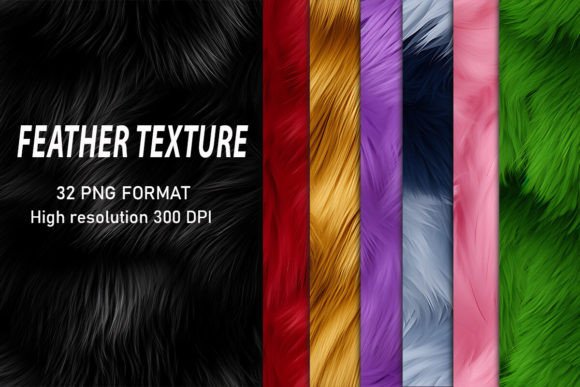
When I opened the Colorful Feather Texture Backgrounds pack, my first thought wasn’t “pretty”—it was “versatile.” These aren’t cartoonish feathers or stiff vector motifs. They’re soft-edged, layered, and subtly dimensional—like light catching real plumage. The 32 PNG files feel intentional: no filler, no repeats masquerading as variety. Each one breathes differently—some lean into warm coral-and-gold gradients, others shift toward cool teal-and-lavender mist. That variation matters when you’re stitching for clients who want uniqueness without custom design fees.
Real Project Test: Embroidering a Boutique Tote Bag
Last week, I used one of the lighter feather backgrounds as a subtle all-over texture behind a monogram on a natural canvas tote for a local gift shop. Not as a focal point—but as quiet luxury beneath the lettering. It worked because the feather pattern is dense enough to read at arm’s length, yet open enough that the embroidery machine didn’t choke on stitch density. No skipped stitches. No thread breaks. Just smooth fill stitch that moved *with* the fabric—not against it. Customers noticed the depth, not the technique. That’s the sign of a background that supports, not competes.
Where It Shines—and Where It Asks for Thought
Colorful Feather Texture Backgrounds excels on medium-weight woven fabrics: cotton twill for aprons, brushed poly-cotton for baby blankets, midweight linen for pillow covers. On a sweatshirt? Choose the lower-contrast versions—soft peach-on-cream reads better than neon yellow-on-charcoal after stitching. For caps or curved surfaces, avoid the most intricate variants; stick to those with broader feather shapes and gentler edges. They’ll hoist cleanly in a 4x4 hoop without distortion.
On thin or stretchy fabric—think lightweight tees or knit baby onesies—test stabilizer first. A tear-away alone won’t cut it. Add a light cutaway underneath. And if you’re layering this over another design (say, a floral applique), check how the feather texture interacts with satin stitch borders. Some versions have fine interior lines that can blur if overlaid too tightly.
Washing & Wear: A Quiet Confidence
I stitched one version onto a kitchen towel using high-contrast thread (deep navy on oatmeal linen) and ran it through six hot washes. The feather texture held its shape—no fraying, no ghosting. Why? Because these aren’t ultra-fine lace-like patterns. They’ve got gentle rhythm and breathing room between elements. That translates to durability in handmade products meant for real life—not just shelf appeal.
For Etsy Sellers & Small Shop Owners: More Than Just Pretty Pixels
If you sell digital embroidery files, Colorful Feather Texture Backgrounds is a smart add-on bundle—especially paired with monogram sets or seasonal motifs. Buyers love “ready-to-layer” assets. But here’s what sets it apart: it doesn’t scream “clip art.” It feels curated. That lifts perceived value. One Etsy seller told me her customers now ask, *“Do you have more textures like that feather one?”*—which means repeat traffic, not one-off downloads.
For physical product sellers: use it behind hand-lettered quotes on tea towels, under embroidered names on nursery pillows, or as a tonal base on holiday stockings. It adds sophistication without complexity—ideal when you’re balancing speed, quality, and profit margin.
Design Integrity Checks Every Embroiderer Should Run
- Test on scrap fabric first—especially if using dark thread on light fabric or vice versa. Feather textures can recede or pop depending on contrast.
- Review stitch density visually before sending to your machine. Some PNGs translate to heavier fills; adjust underlay or reduce density if needed for lightweight garments.
- Confirm hoop size compatibility. While the PNGs are approx 4672 pixels wide, actual stitch dimensions depend on your digitizing software. Always scale and preview in your embroidery program.
- Inspect small details—feather tips, edge transitions, gradient zones. What looks seamless on screen may need cleanup for clean satin stitch execution.
- Try black-and-white mockups. If the texture vanishes in grayscale, it may lack enough tonal separation for legibility on varied fabric colors.
- Check licensing before selling finished items or bundling digitally. These are graphics—not pre-digitized embroidery files—so your digitizing workflow and commercial rights depend on the source license.
Final Thought: A Background That Behaves Like a Collaborator
Good background designs don’t distract—they deepen. Colorful Feather Texture Backgrounds does that quietly, consistently. It doesn’t demand attention, but it earns respect: from clients who feel the care in the finish, from buyers who sense the intention behind the texture, and from fellow designers who recognize thoughtful curation over algorithmic output. Whether you’re stitching a personalized baby bib, building a cohesive boutique collection, or scaling a craft business on Etsy, this set works *with* your process—not around it. It’s not flashy. It’s functional, flexible, and quietly confident—exactly what a working designer needs in a background.