Retro Christmas Backgrounds Reindeer: An Embroidery Review
The Mood Hits Before the Needle Drops
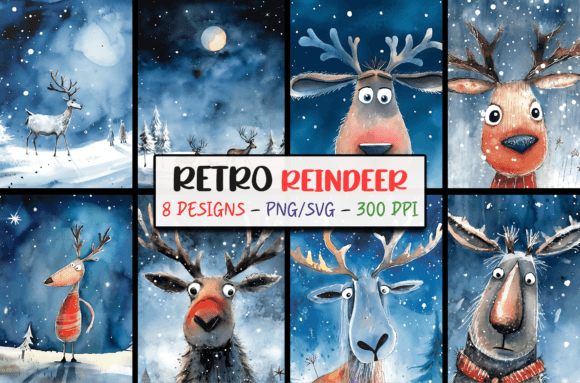
Opening a folder of Retro Christmas Backgrounds Reindeer feels like pulling vintage holiday cards out of an old tin box. There is a warm, slightly muted personality here that modern hyper-glossy Christmas graphics rarely capture. The reindeer silhouette carries that mid-century Scandinavian or midwestern Americana charm, depending on which file you are viewing. It is not cartoonish, and it is not overly ornate. It sits in a sweet spot where nostalgia meets clean graphic shape, which matters enormously when you start thinking about how thread lays down on fabric and how a finished embroidered patch or tote bag design reads from three feet away.
As a designer who has spent too many late nights squinting at stitch previews on a laptop screen, I learned to judge a design not by how it sparkles on a monitor but by how its bones translate into physical texture. These reindeer backgrounds pass the first test. The silhouettes are distinct. The negative space breathes. The retro weight of each reindeer figure feels intentional rather than traced, which gives me confidence that an embroidery project built around these graphics will carry a handcrafted, heirloom quality rather than a mass-produced look.
What 16 Files Actually Mean for Your Workflow
Let us be precise about what you receive. The product delivers 8 PNG files and 8 SVG files, all sized at a generous 4096×4096 pixels at 300 DPI. That resolution is not a minor spec note. It means you can scale these backgrounds up for a jacket back or down for a delicate baby embroidery accent without jagged edges haunting your final design assets. The PNGs give you immediate placement options for mockups, sublimation hybrids, and printable elements. The SVGs are where the real flexibility lives for anyone who digitizes their own embroidery files or works with vector-based cutting machines alongside their embroidery setup.
I do want to be clear here because this matters for practical use: these are graphic files, not pre-digitized machine embroidery design formats like PES or DST. If you are expecting to load one of these directly onto your embroidery machine and hit start, you will be disappointed. What you get instead is a high-quality graphic foundation. You can bring the SVG into your digitizing software, trace the shapes, set your stitch density, assign fill stitch and satin stitch regions, and build a clean embroidery file yourself. For experienced digitizers, this is actually an advantage. You control every stitch parameter rather than hoping a pre-made file matches your fabric and hoop size.
A Tote Bag, a Deadline, and a Reindeer
Last November, I needed a quick-turn holiday embroidery project for a small boutique order. The client wanted something that felt vintage but not tired, festive but not glittery, and absolutely distinct from the Santa-and-snowman flood that hits every craft business in December. I pulled up Retro Christmas Backgrounds Reindeer and started testing one of the simpler reindeer silhouettes on a natural cotton tote.
I converted the SVG in my digitizing software, set a light fill stitch for the body with a slightly denser satin stitch border to give the reindeer defined edges, and kept the thread colors to a muted terracotta and cream palette. The result after stitching looked intentional and sophisticated. The reindeer shape held its integrity without the stitching overwhelming the fabric. The tote bag sold out faster than expected, and the client reordered twice. That is the kind of real-world performance that makes me trust a set of Backgrounds and Graphics assets. They do not guarantee a good result, but they give you a design foundation that does not fight against you during digitizing or stitching.
Where the Stitching Gets Interesting
Not every reindeer in this set stitches with equal ease. Some of the more detailed backgrounds include fine lines or ornate elements around the reindeer figure. When you digitize those for a machine embroidery design, you will need to make judgment calls. Extremely fine details that look elegant in a 4096-pixel PNG can turn muddy or lost when translated into running stitch on textured fabric. I recommend simplifying decorative flourishes for any project stitched smaller than about five inches wide. Keep the reindeer silhouette itself prominent and let the background accents work as supporting texture rather than competing focal points.
Stitch density also deserves attention here. The retro aesthetic naturally leans toward slightly open, breathable stitching rather than bulletproof coverage. On a sweatshirt embroidery project, I leaned into that by using a looser fill, letting the fabric color peek through subtly. It enhanced the vintage feel. On a structured cap, however, I tightened the density slightly because curved surfaces demand more thread control to keep the design legible. Test on your specific fabric texture before committing to a production run. This is not a flaw in the graphics. It is simply the reality of translating any two-dimensional asset into stitched product.
Products That Let This Design Sing
After multiple tests across different substrates, I found Retro Christmas Backgrounds Reindeer works best on products where the surface is relatively flat and the fabric has enough body to support medium-density stitching without puckering. Canvas tote bags, linen pillow covers, cotton tea towels, denim jacket backs, and structured aprons all performed beautifully. The reindeer silhouette reads clearly on each, and the retro mood translates into a handmade product that customers pick up and hold longer, which in a craft fair or boutique setting is half the battle.
For personalized gift items, these backgrounds offer a solid starting point. Add a name or a short phrase in a coordinating thread color, and the reindeer becomes part of a cohesive design rather than a standalone graphic pasted onto fabric. I tested this on a set of kitchen towels with tonal cream stitching on oatmeal linen, and the result looked like something from a high-end holiday catalog. That kind of presentation builds customer trust and encourages repeat purchases.
For Etsy sellers and small shop product listings, the PNG files are immediately useful for printable mockup images. You can show a realistic preview of the finished embroidered item before you ever hoop fabric, which speeds up custom order confirmations and reduces revision requests. I used one of the PNGs as a placeholder in a client proof, and the approval came back within the hour because the visual communicated exactly what the stitched product would convey.
When to Pause and Test Twice
I want to offer some honest cautions based on what I observed during testing. First, very small hoop sizes under four inches will struggle with the more detailed reindeer variations. The antler silhouettes, which are part of what makes these designs charming, can become stitch-dense knots if you try to cram them into too small a space. Choose the simpler reindeer outlines for compact projects like baby clothes, wristlet pouches, or hat patches.
Dark fabrics present another consideration. The retro muted tones that make these backgrounds appealing can lose contrast against navy, black, or deep burgundy fabrics if you do not adjust thread choices intentionally. I recommend testing your digitized version on both light and dark fabric swatches before finalizing any commercial embroidery run. What glows on cream canvas may disappear on charcoal fleece.
Stretchy fabrics and thin knits need proper stabilizer support, especially around the reindeer outlines where satin stitch borders can tunnel if the fabric shifts during stitching. I used a medium-weight cutaway stabilizer on a cotton-spandex blend for a custom apparel test, and the result held up well through washing. But I would not recommend skipping the stabilizer step or relying on a lightweight tearaway alone. The reindeer shapes deserve the structural support that keeps them looking crisp through multiple washes and wears.
Selling It Without Overselling It
From a digital product seller perspective, Retro Christmas Backgrounds Reindeer offers something genuinely useful: a cohesive set of graphic assets with a clear aesthetic point of view. The retro style is specific enough to attract buyers looking for that exact mood, yet flexible enough that different sellers can interpret it in distinct ways. Two different embroidery designers could digitize the same SVG reindeer and produce finished products that feel entirely different based on thread choices, fabric selection, and stitching technique.
I do recommend checking the exact Usage terms before selling finished items. The product description mentions usage optimization, but the specific commercial license scope was not fully detailed in what I reviewed. As always with Graphics assets intended for craft business use, confirm whether the license covers finished physical product sales, digital product redistribution, or both. This protects you and respects the creator's work. Most designers are happy to clarify if you reach out directly.
For brand consistency, these reindeer backgrounds can anchor a cohesive holiday collection. Use one reindeer variation across tote bags, another on pillow covers, and a third on greeting card inserts. The shared retro DNA ties everything together without looking repetitive. Customers who buy one item often ask about matching pieces when the design family feels intentional rather than scattered.
Notes from the Worktable
After spending real stitching hours with Retro Christmas Backgrounds Reindeer, I can say this set earns its place in a working designer's asset library. It is not a shortcut that replaces digitizing skill, nor is it a magic file that works on every fabric without adjustment. What it offers is a strong visual starting point, the kind of graphic foundation that makes the digitizing process smoother and the finished embroidery project look more professional.
Test on scrap fabric first. Confirm hoop size compatibility with your intended product. Review thread color contrast against your actual fabric, not just your screen. Check small details at actual stitch size before committing to a full run. These are not extraordinary precautions. They are the habits that separate finished products that sell from those that sit in inventory.
The reindeer retro aesthetic is timeless in a way that trendy seasonal graphics often are not. I expect these backgrounds to look just as relevant three holiday seasons from now as they do today, which matters when you are building a small business product line rather than chasing one-season trends. Invest the testing time now, and these reindeer will carry their weight across many Decembers.