Dripping Christmas Glitter Backgrounds: A Designer Review
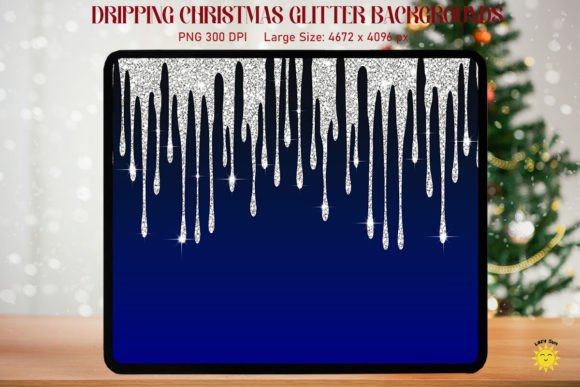
I have stared at hundreds of holiday designs over the years, and most follow the same safe formula. The moment I opened Dripping Christmas Glitter Backgrounds, I felt something different. There is a liquid, almost molten quality to the glitter flow that breaks away from flat, predictable Christmas graphics. Imagine melted icicles catching light, gold and silver rivulets running down a surface, and that expensive boutique-window shimmer translated into something you can actually stitch onto fabric. That is the mood this design creates.
For embroidery designers, the real question is never just whether a graphic looks good on screen. It is whether that visual holds up after thread hits fabric, after washing, after a customer holds the finished product in their hands. That is exactly what I wanted to test as I prepped a holiday tote bag project using this background as the anchor element.
The Visual Personality of Molten Holiday Glitter
What struck me first was how the dripping effect creates natural movement. This is not a static pattern of stars or snowflakes. The elongated, vertical drip lines give the eye a path to follow, which matters enormously when you translate a Graphics file into a machine embroidery design. A background with directional flow can make a simple tote bag or sweatshirt feel more dynamic and professionally composed. The glitter texture itself reads as celebratory without being juvenile, which opens up product possibilities beyond children's wear into sophisticated holiday decor and adult apparel.
I could immediately picture this working as a base layer for embroidered monograms on pillow covers, or as a bold panel on the back of a denim jacket. The dripping effect frames whatever you place on top, almost like a built-in compositional guide. For small business owners who struggle with layout decisions, that is a quiet but valuable feature.
Where This Design Belongs in Real Embroidery Projects
After examining the detail level and overall spread of the glitter drips, certain applications jumped out as natural fits. This is not a delicate, miniature design meant for a tiny pocket corner. It has presence. It wants space to stretch out and catch light. Here is where I would confidently place it:
- Custom apparel: Sweatshirt backs, oversized chest prints on t-shirts, sleeve panels on baseball tees
- Tote bags and canvas carryalls: Full front panel or centered with a name embroidered over it
- Pillow covers and home decor: Holiday throw pillows, mantle scarves, table runners
- Aprons: A statement bib design for holiday baking aprons sold at craft fairs
- Blankets and nursery decor: A shimmering corner accent on a baby blanket for Christmas newborn gifts
- Boutique branding: Store packaging inserts, hang tags, or digital mockup backgrounds for Etsy listings
- Commercial embroidery projects: Small batch holiday merchandise, pop-up shop exclusives, limited edition drops
I kept coming back to one specific image: a natural linen tote bag with the Dripping Christmas Glitter Backgrounds filling the lower third, gold metallic thread catching actual light, and a simple family name embroidered in a clean serif font above it. That product would sell at a holiday market in minutes. It feels personal, luxurious, and completely giftable.
A Real Project Walkthrough: The Holiday Tote Test
Let me walk you through how I approached using this design for a client's holiday tote project. My client runs a small handmade shop and needed something that felt premium but not fussy. She wanted totes that customers would reach for year after year, not something that screamed a single Christmas season.
I pulled up the Dripping Christmas Glitter Backgrounds file and immediately checked two things: how the drips taper at the bottom and how dense the glitter clusters get around the midsection. In embroidery terms, those tapering ends translate into gradual satin stitch transitions or carefully stepped fill stitch density changes. If the drip ends are too blunt, the stitched result looks chopped and amateurish. This design handled the taper well, with organic irregularity that reads as intentional melting rather than a rushed vector trace.
I ran a sample stitch-out on medium-weight cotton canvas, using a soft gold metallic thread paired with a champagne polyester bobbin. The glitter texture, when converted properly into an embroidery file, created a broken-light effect exactly like scattered sequins. The drips maintained their vertical integrity even on a slightly textured weave, which told me the design had enough structural clarity to survive fabric grain interference.
One critical step I always take: I test the design in grayscale before committing thread colors. A black and white mockup reveals whether the design relies too heavily on color contrast to make sense. This background held up surprisingly well in monochrome, meaning it would still look intentional on darker fabrics where glitter effects depend more on stitch angle than hue.
Practical Stitching Notes Every Maker Should Know
Before you upload this design to your machine and press start, there are honest considerations worth your time. I learned some of these the hard way over years of ruined blanks and last-minute project saves.
Hoop size matters: The dramatic drip spread means this design will occupy a generous hoop space. If you are working with a 4x4 inch hoop, you will lose the sweeping vertical effect that makes this background special. I strongly recommend using at least a 5x7 inch hoop, and an 8x12 or larger hoop will let the design truly breathe. Check the actual hoop size requirements before purchasing to avoid frustration.
Stabilizer choice is non-negotiable: A design with this much continuous fill area generates significant stitch density. On a medium-weight woven fabric, I used a medium weight cutaway stabilizer and got clean results with no puckering. On a stretchy sweatshirt knit, I added a temporary adhesive spray and a water-soluble topper to prevent the stitches from sinking into the fabric nap. Do not skip the topper on fleece or terry cloth.
Thread color selection makes or breaks the glitter effect: The magic of a glitter background lives in the interplay between light thread and shadow gaps. Metallic threads are the obvious choice, but they can be temperamental. I tested both a true metallic gold and a high-sheen polyester gold alternative. The polyester stitched smoother and still caught light beautifully. If you are selling finished products, test both on your specific fabric and see what photographs best for your Etsy listing or craft fair display.
Small details need scrutiny: The finer glitter particles scattered between the main drip lines must survive the embroidery digitizing process. If the stitch density crowds those tiny spots, they can turn into muddy blobs rather than sparkling accents. Stitch a test section and examine it under natural light before committing to a full run. Your customer will notice the difference between crisp glitter and thread chaos.
Fabric Considerations That Affect Finished Results
Not every fabric welcomes a dense, flowing background design equally. Through trial and error across countless holiday projects, I have mapped out which surfaces work and which need extra care.
- Dark fabrics: The dripping glitter effect pops dramatically on black, navy, forest green, and deep burgundy. The contrast makes the thread shimmer read as true sparkle. This is where the design shines brightest.
- Light fabrics: Natural linen, cream canvas, and soft white cotton create a more subtle, tone-on-tone elegance. Perfect for minimalist holiday decor and baby items where you want festivity without harsh contrast.
- Textured fabrics: Terry cloth towels, chunky knit sweaters, and waffle weave blankets challenge the drip clarity. If you must stitch on a textured surface, use a heavy water-soluble topper and accept that some fluidity will be lost to the fabric nap.
- Thin and stretchy fabrics: Lightweight jersey and thin rayon blends risk puckering under dense fill areas. A firm cutaway stabilizer and reduced stitch density adjustments can help, but these fabrics remain a gamble with large glitter panels.
- Curved surfaces like caps: The vertical drip design technically works on a structured cap front, but the curved surface will distort the straight drip lines. I would reserve this background for flat or gently contoured surfaces to preserve the intended flow.
How Customers Perceive Glitter Embroidery on Handmade Products
I pay close attention to buyer psychology when I evaluate a design. Shimmer and sparkle trigger emotional responses that flat matte designs simply cannot reach. When a customer picks up a tote bag featuring the Dripping Christmas Glitter Backgrounds, their brain registers luxury, celebration, and care. That perception directly affects what they are willing to pay.
For Etsy sellers and craft business owners, this type of design signals attention to detail. A background that looks complex and rich communicates that the maker invested time and skill. Even if the stitching itself is straightforward, the visual result feels premium. I have watched similar glitter-effect designs help sellers raise their product pricing by twenty to thirty percent because customers associate metallic sheen with higher value.
Giftability also increases. A holiday tote or pillow cover with shimmering drips reads as a deliberate, special-occasion gift rather than a generic handmade item. Recipients keep these pieces. They pull them out each holiday season and the product becomes part of a family tradition. That is powerful branding for any small shop.
Smart Ways to Maximize This Design Across Product Lines
One of the most cost-effective moves a creative entrepreneur can make is letting a single Backgrounds file stretch across multiple product categories. With this dripping glitter design, the possibilities extend beyond the obvious.
On aprons, stitch the background across the bib and add a small embroidered gingerbread man or monogram on top. On kitchen towels, place the glitter drips along the hemline for a subtle festive accent that still functions as a practical towel. For baby embroidery, use the background sparingly as a nameplate backdrop on a onesie or as corner decoration on a nursery blanket. The melting glitter motif feels whimsical enough for children's items without looking cartoonish.
Digital product sellers can use the Graphics file for printable mockups and product previews, letting customers visualize embroidered glitter effects before ordering. This builds buyer confidence and reduces hesitation. A well-presented mockup featuring realistic glitter drips on a lifestyle product shot can drastically improve conversion rates in online shops.
For commercial embroidery clients placing bulk orders, confirm whether the design license covers production use. When licensing information is not clearly provided in the product listing, contact the designer directly and get written permission before printing finished merchandise. This protects your business and maintains professional integrity.
My Honest Take After Working With This Design
The Dripping Christmas Glitter Backgrounds file earns its place in my design library. It solves a specific problem: how to create the illusion of expensive, multidimensional shimmer on fabric using only thread and a smartly structured pattern. The dripping motif feels current without chasing a fleeting trend, which means products made with it will look relevant for multiple holiday seasons.
I appreciate designs that give makers creative flexibility, and this background does exactly that. Layer a monogram over it. Frame a holiday greeting. Let it stand alone as an all-over glitter panel. Combine it with applique design elements for mixed-texture projects. The only real limitation is hoop size, and for makers equipped with larger machines, that concern disappears entirely.
Before committing to a production run, stitch a full sample on the exact blank you plan to sell. Check thread tension on the dense areas. Wash the sample once and inspect for any glitter detail loss. Photograph the washed sample under different lighting conditions to see how your product photos will look. These steps take an afternoon but prevent disappointing customers later.
If you are preparing for holiday craft fairs, stocking an Etsy shop, or fulfilling custom boutique orders, this design offers that elusive combination of visual impact and practical stitchability. It makes ordinary products feel curated and special. That is exactly the kind of asset smart makers keep close.