Natural Wood Grain Textured Backgrounds Graphics
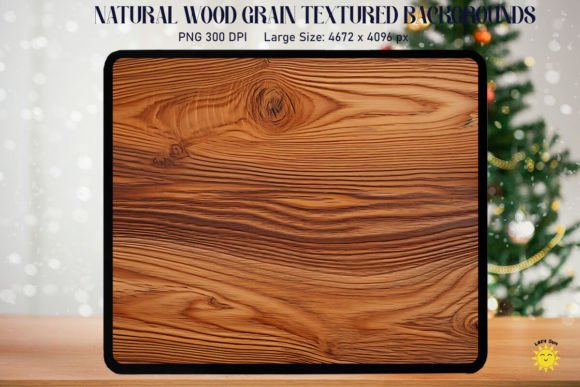
As a brand designer who’s developed visual identities for over 40 local businesses—from maple syrup makers in Vermont to ceramic studios in Portland—I opened Natural Wood Grain Textured Backgrounds expecting warmth, authenticity, and tactile nuance. What I found was a quietly powerful graphic design asset: one high-res PNG file (4672 × 4096 px) that delivers rich grain variation, subtle tonal depth, and organic imperfection—no repetition, no artificial gloss, no digital sterility. It doesn’t scream. It settles in. And that’s exactly why it works so well for real small business branding.
A Mood That Builds Trust Before a Word Is Read
This isn’t “wood” as a cliché—it’s wood as a quiet storyteller. The texture reads as hand-harvested, sun-dried, carefully sanded. It suggests integrity, craft, and groundedness—not rustic kitsch or forced nostalgia. For a local skincare brand using cold-pressed botanicals, it instantly signals purity and care. For a coffee roastery sourcing from regional farms, it evokes earthiness and process. It leans into organic, warm, artisanal, and quietly confident—never loud, never trendy, never disposable. That subtlety is rare in stock graphics—and critical for local business credibility.
Where It Elevates Real Packaging & Brand Touchpoints
I recently used Natural Wood Grain Textured Backgrounds across three touchpoints for a small-batch candle studio in Asheville: product labels, thank-you cards tucked inside orders, and Instagram carousel ads for their holiday collection. Here’s where it delivered measurable impact:
- Product labels: Printed on kraft paper with soy ink, the background added dimension without competing with hand-lettered typography—boosting shelf appeal and reinforcing handmade credibility.
- Thank-you cards: Used as a subtle watermark behind minimalist copy (“Made with beeswax + gratitude”), it deepened emotional connection without clutter.
- Social media graphics: As a hero backdrop behind product mockups, it unified the feed visually—making scroll-stopping consistency possible without custom photography every time.
It also strengthened visual hierarchy on price lists for their brick-and-mortar shop, anchored seasonal packaging for lavender-honey soap, and elevated printable inserts for subscription boxes—all while preserving clean legibility and brand cohesion.
Why Local Businesses Gain More Than Aesthetic Polish
When your bakery wraps sourdough loaves in branded paper or your floral shop prints hang tags for dried bouquets, every surface is a trust signal. Natural Wood Grain Textured Backgrounds supports that work by:
- Creating a stronger first impression—customers subconsciously associate natural texture with honesty and care;
- Improving product recognition—consistent use across labels, stickers, and web banners builds familiarity faster;
- Supporting clearer visual hierarchy—its gentle contrast makes serif and handwritten fonts pop without harsh drop shadows;
- Strengthening emotional connection—especially for food, wellness, and home goods brands where warmth and authenticity drive purchase decisions;
- Delivering more polished marketing visuals—without requiring custom illustration or expensive photo shoots.
Best Uses: Where This Graphic Design Asset Shines
For small business branding and packaging design, Natural Wood Grain Textured Backgrounds excels when used intentionally—not as filler, but as intentional atmosphere. Top-performing applications include:
- Product label accents (especially for jars, tins, and apothecary-style bottles);
- Packaging die-cut windows or liner textures;
- Hero graphics for website banners and email headers;
- Decorative elements in Canva templates for social media managers;
- Backgrounds for printable product mockups shared with retailers;
- Seasonal campaign visuals—think autumn harvest boxes or spring botanical launches;
- Boutique signage, menu boards, and in-store display cards.
Cautions: Where Simplicity Wins Over Texture
Not every context benefits from wood grain. Avoid using Natural Wood Grain Textured Backgrounds in these scenarios without thoughtful adaptation:
- Formal corporate branding—law firms, financial advisors, or tech startups seeking sleek minimalism;
- Very small labels (under 2" × 2") where grain detail blurs or overwhelms;
- Crowded packaging layouts with dense ingredient lists or regulatory text;
- Areas requiring high contrast for accessibility (e.g., legal disclaimers or allergen statements);
- Luxury minimalist brands relying on stark white space or monochrome precision;
- Any application where texture competes with essential information—clarity always trumps decoration.
Practical Designer Notes for Real-World Use
Before committing Natural Wood Grain Textured Backgrounds to client work or physical production, test rigorously:
- Preview it on actual packaging mockups—not just screens—to assess how grain interacts with print stock, ink absorption, and lighting;
- Check black-and-white conversion: does grain retain enough contrast for grayscale printing or fax-friendly assets?
- Test it beside your brand’s full font palette—especially script and display fonts—to confirm readability and harmony;
- Compare it against competitor packaging: does it differentiate your brand, or blend in?
- Verify commercial licensing: this is a digital product intended for commercial design, but confirm usage rights cover physical product sales and resale;
- Inspect the PNG transparency—does it layer cleanly over color blocks or gradients? (This version includes no alpha channel, so plan overlays accordingly);
- Remember: it’s a PNG design, not SVG or vector—so scaling beyond its native resolution may soften detail. Stick to its intended size range for print-critical uses.
For handmade businesses, food brands, and local retailers building identity from the ground up, Natural Wood Grain Textured Backgrounds isn’t just another background—it’s a quiet amplifier of authenticity. When paired with thoughtful logo design, intentional typography, and cohesive color strategy, it becomes part of a brand identity that feels earned, not assembled. In an era where customers choose people over pixels, that grounded, human texture matters more than ever.