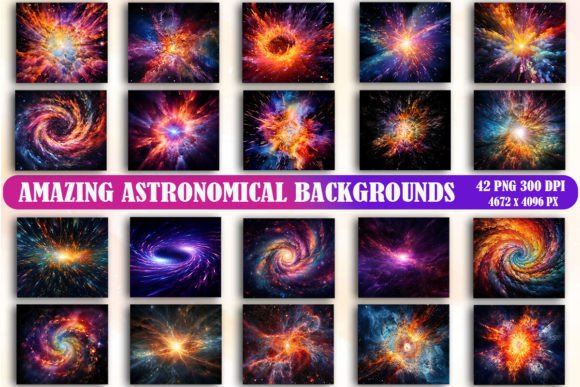
Amazing Astronomical Backgrounds: Graphics & Backgrounds
When I first opened this pack of Amazing Astronomical Backgrounds, I was looking for something that could lift a print-on-demand space collection I’ve been quietly testing. I run a small online shop on Etsy, supplement with Creative Fabrica printables, and occasionally design simple Canva templates for other crafters. I needed backgrounds that felt scientific yet soft enough to pair with typography. The moment I saw the cosmic microwave background textures, the faint galactic backdrops, and the astral landscapes, I knew these were going to be more than pretty desktop wallpapers. They had a mood — contemplative, slightly mysterious, but not cartoonish. The niche appeal is clear: it’s for sellers who cater to stargazers, science fans, astronomy lovers, and anyone who enjoys quiet, expansive imagery for their product line.
Visual Personality and Buyer Appeal
These aren’t simple black skies with white dots. Instead, you get subtle color washes that echo Cosmic Microwave Radiation patterns, deep violet and indigo gradient sweeps, and soft glows that remind me of public observatory projections. There’s a reference to the early universe in some files, almost like a gentle rendering of the Big Bang Theory aftermath, but it’s abstract enough to work as a decorative element. The overall look is elegant and slightly premium — not festive, not cute, and definitely not rustic. If your shop leans toward educational decor, modern science prints, or meditative celestial stationery, these backgrounds will fit. For crafters who sell nursery mobiles or whimsical kids’ room prints, these might feel too restrained unless you layer playful clipart over them. I’d classify the mood as contemplative modern with a minimal scientific edge. That immediately tells me my target buyer is someone decorating a home office, a quiet bedroom, or a classroom. It’s not trendy boho or vibrant retro, but it can anchor a product collection that needs consistent, calm visual storytelling.
Testing for Physical and Digital Products
Before listing anything, I always test assets across the formats my customers actually want. I printed a sample from this bundle at 300 DPI on matte cardstock for wall art and ran a sublimation transfer onto a ceramic mug. The gradients held up better than I expected, though I noticed a tiny bit of banding in one very dark background when printed on a lower-quality laser printer. For digital download sellers, that’s not a problem, but for crafters creating tumbler wraps or mug designs for sublimation, I’d recommend a test print on your specific equipment first. The PNGs I inspected had clean transparency where applicable, so creating layered Canva templates or social media graphics is straightforward. For Cricut users, these backgrounds aren’t cut files, but you can easily print and cut elements against them. I designed a simple layered card with a silhouette of a telescope on top of one galactic backdrop — it cut perfectly on a standard matte sticker paper.
One of my favorite tests was a quick planner sticker sheet. I overlaid white minimalist icons and tiny text. The contrast worked well on lighter cosmic scenery areas, but I had to avoid placing dark script fonts over the deepest portion of some backgrounds. If you’re a sticker designer, treat these like they’re a vast backdrop — crisp line art and bold white type pop wonderfully; thin hairlines or translucent elements can get lost. For t-shirt graphics and tote bags, I previewed a few designs on mockups. When I placed a white astronaut illustration over a deep blue galactic backdrop, it felt professional and subscriber-worthy. I’d likely target Science Fair merch or observatory gift shop styles with these rather than streetwear or funky retro tees.
Product Collection Possibilities
Here’s where I get excited. With a cohesive set of backgrounds like this, you can spin off a huge range of products without repeating yourself. I built out a small collection concept while testing:
- Printable wall art sets with poetic quotes about the universe — I paired a serif font with one of the lighter astral landscapes, and it looked gallery-ready.
- Invitation templates for a “starry night” themed birthday party. I tweaked the opacity so the background remained decorative but left the text readable.
- Digital paper packs for scrapbookers. I simply cropped seamless tiles from the original files and organized them by color temperature.
- Canva template thumbnails for myself and clients. A good background is often the silent engine behind a high-click listing image.
- Greeting cards — birthday, sympathy, and ‘thinking of you’ messages work beautifully with these quiet, expansive visuals.
- Social media promo graphics for my shop. A cosmic backdrop under a simple sale announcement adds perceived value instantly.
Because the style is consistent, packaging these into a design bundle or a themed seasonal collection (hello, winter solstice and eclipse events) is straightforward. I could see a fellow Etsy seller listing a Space Exploration Bundle that includes these backgrounds plus a few matching icons or overlays.
Listing Image and Mockup Strategy
As a seller, I’ve learned that a background asset can make or break your product mockups. Amazing Astronomical Backgrounds work brilliantly as the setting for flat lays and device screens. When I mocked up a digital download package preview — phone, tablet, and print frame on a white desk — these backgrounds provided a strong color story without distracting from the product itself. They also added a cohesive look when I placed multiple design variations in a single image for a marketplace thumbnail. On Etsy, where a listing image must catch the eye while scrolling, a rich galactic backdrop behind a clean mockup can halt the scroll. That subtle emotional pull often translates to higher click-through, especially when your competitor uses plain white or messy mockups.
However, I’d caution against using them for thumbnails where you need to show tiny details — like intricate cutting lines for a Cricut project or small sticker elements. The deep saturation can overpower delicate line work. Save these for the main hero image and use cleaner, lighter backgrounds for detail shots. If you’re creating a print-on-demand store on Shopify, use these as the background for your entire product lineup cover to build brand consistency. I’ve seen that kind of visual unity boost perceived collection value.
Where They Work Best — and Where to Be Careful
After dozens of quick product simulations, here’s my honest evaluation of fit:
Strong applications:
- Large‑scale printable wall art, posters, and canvas prints. The astral landscapes and cosmic scenery hold their own without text.
- Product mockup backgrounds for digital download listings, especially when you need to showcase multiple colorways.
- Background layers for Canva templates (blog headers, Pinterest pins, quote graphics) — just adjust the opacity for text safety.
- Fabric designs on print‑on‑demand items like duvet covers, shower curtains, or yoga mats where the pattern becomes the star.
- Layered stationery design — I especially loved them for notepad covers and journal kits.
Proceed with caution:
- Extra‑small products like vinyl decals or tiny earring cards — the visual complexity can become muddy at scale.
- Full‑bleed designs for Cricut print‑then‑cut projects where cutting lines need extreme clarity. Always test your registration.
- Text‑heavy templates like wedding menus or corporate resumes. The background’s dark areas might swallow lighter text unless you do heavy editing.
- Low‑resolution or overly compressed PNG exports. Always check your file specs before bundling for customers.
- Products intended for very old or low‑quality printers — the subtle gradients need decent color handling.
Practical Seller Checks Before You Publish
If you’re serious about selling anything built on Amazing Astronomical Backgrounds, I’d recommend a quick internal audit. Here’s what I do:
- Mockup test at thumbnail size: Shrink your design to 200px wide. Can you still read the product intent? If not, rethink the composition.
- Print test on both coated and uncoated paper: Some backgrounds shift color significantly. My matte cardstock darkened the cosmic microwave areas more than the screen suggested.
- Transparency check: If you’re layering these, confirm that edges aren’t jagged when placed over white or black. Most files were clean, but I did find one tiny phantom pixel on an older monitor.
- Font pairing trials: I tested scripts, geometric sans, elegant serifs, and a chunky display font. Overall, clean sans‑serif and light serif type won. Handwritten script looks romantic, but it needs a lot of contrast to stay readable. Pair with Scriptina or Playfair Display for sophistication, or Montserrat Light for a modern science vibe.
- Licensing confirmation: I’m always careful about commercial licensing. These come with extended rights for physical and digital products, but always read the fine print. Never assume unlimited resale on print-on-demand without checking the original designer’s terms.
- File organization: If you plan to resell derivative digital products, organize the source files into clear folders before packaging. Your customers will thank you, and it signals a professional brand.
Building a Cohesive Shop Collection
What finally convinced me to integrate these into my next seasonal drop was the background universality. A single graphic design asset like this can anchor multiple product types — mugs, prints, journal kits, social media templates — and still look like a curated family of goods. While preparing my own shop section, I paired three different backgrounds with hand-drawn constellation overlays and a uniform color palette. The result felt like a purposeful brand identity rather than a random clipart scramble. For small business owners with limited time, that kind of visual shortcut is invaluable.
I also saw potential for packaging design if you offer wrapping paper or custom boxes through a POD provider. The subtle cosmic texture adds a premium feel without overwhelming the product itself. If you’re a content creator selling downloadable social media packs, these backgrounds can double as presentation decks for Instagram carousels, adding depth to educational or inspirational posts.
One area that deserves mention: the interplay of dark background detail and screen brightness. For shoppers viewing your listing on a dim phone screen, the faint cosmic microwave background structures might disappear altogether, leaving what looks like a near‑black canvas. I’d suggest brightening the midtones slightly for your preview images or adding a subtle glow effect to keep the intricacy visible across devices. It’s a tiny adjustment, but it can make or break that all‑important first impression in a crowded marketplace.
Ultimately, Amazing Astronomical Backgrounds is a practical backgrounds pack for creators who already know their niche. It won’t turn a messy shop into a success overnight — no single graphics asset will — but it can elevate product presentation, simplify your design workflow, and attract the type of buyer who appreciates thoughtful, understated cosmic imagery. I’ve already baked a few designs into my upcoming astronomy‑themed digital download set, and during testing, they’ve performed exactly as a reliable shop staple should.